Locals have been packing the place for years, but a new distinction has just pushed it into the spotlight, confirming that the heart of traditional Lyonnaise cooking sometimes beats loudest far from polished, tourist-heavy streets.
A title that shifts the spotlight away from central Lyon
Every year, food lovers and industry insiders track one question with almost tribal intensity: which address will be named the best bouchon lyonnais? These cosy, often cramped restaurants are considered guardians of France’s most comforting regional cooking.
This time, the winning restaurant is not tucked in the cobbled lanes of Vieux Lyon or by the Saône. The crown for “best bouchon lyonnais 2025” has gone just over the border, to neighbouring Villeurbanne.
The best bouchon lyonnais for 2025 is Café Lobut, located at 55 cours Tolstoï, Villeurbanne, just outside Lyon.
The result, reported by local outlet Lyon People and quickly relayed by food media, underlines a quiet shift. You no longer need a historic postcard setting to represent Lyon’s culinary soul. A modest café-counter on a busy Villeurbanne boulevard can do the job just as well.
Café Lobut, a bouchon frozen in time
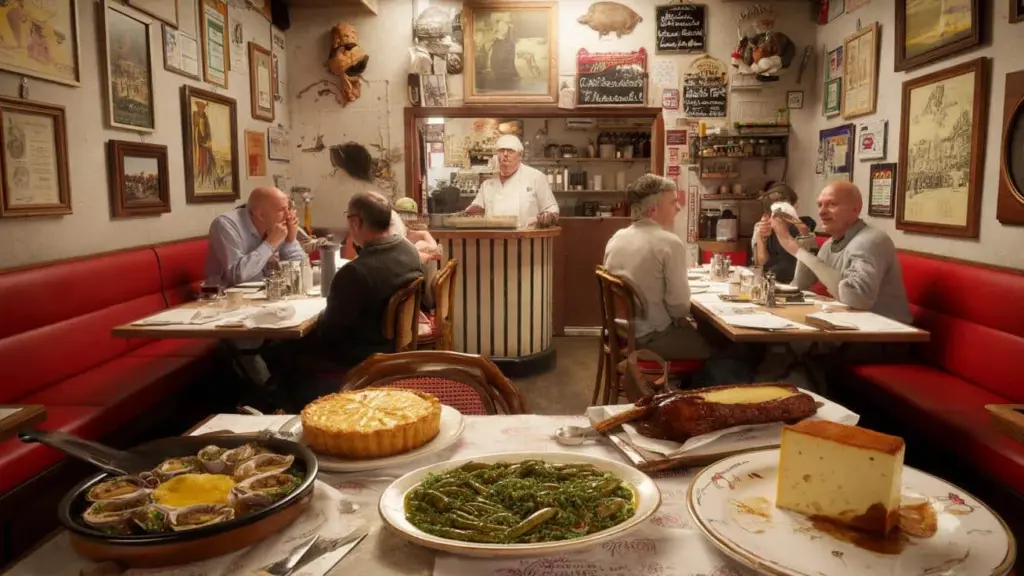
Pushing open the door of Café Lobut feels less like entering a trendy restaurant and more like stepping into a photo from the 1980s. Nothing here tries to look sleek or Instagram-ready. That is precisely why regulars love it.
The chairs and banquettes are covered in bright red vinyl that looks straight out of another decade. The walls are cluttered with old-style paintings, handwritten menus and little details that signal history rather than design consultants.
Forget minimalist décor: Café Lobut proudly leans into kitsch, red vinyl seats and old-school wall art included.
Instead of neon signs and sculpted plating, you get blackboards shaped like pigs, traditional framed scenes and a jumble of objects that trigger nostalgia for anyone who grew up in a French café-tabac. The atmosphere borders on chaotic, but in a way that makes the space feel lived-in and relaxed rather than staged.
➡️ Schlechte aussichten für eine junge mutter die wegen eines fehlers im behördenformular plötzlich tausende euro kindergeld zurückzahlen soll und in einem kleinstadtviertel einen nachbarschaftsstreit auslöst der familien und freundschaften spaltet
➡️ Lange erwartete rentenreform enteignet arbeitende rentner die nebenbei imkern oder land verpachten und zwingt sie zu hohen steuerzahlungen obwohl sie kaum gewinn machen eine entscheidung die das land spaltet
➡️ Wie influencer unsere kinder vergiften warum energydrinks auch ohne alkohol zur sucht führen und weshalb die lebensmittelindustrie das risiko bewusst verharmlost
➡️ Rentner verpachtet wiese an imker und wird vom finanzamt statt mit honig mit einem saftigen steuerbescheid belohnt
➡️ Wenn Klimaretter die Heimat zerstören warum der neue windpark ein ganzes dorf spaltet und niemand mehr von grüner energie sprechen will
➡️ Warum die heizkosten explodieren obwohl sie weniger verbrauchen und was die politik ihnen verschweigt
➡️ Warum starre Routinen im Januar besonders schnell scheitern
➡️ Nation gespalten nach urteil chef schickt verkäuferin zu spät nach hause gericht sieht mitschuld und das land streitet über verantwortung
A social hub as much as a restaurant
Behind the counter and in the dining room, two figures drive the café’s energy: Philippe and Cyrille Moy. Over time, they have turned Café Lobut from a simple café-comptoir into a real neighbourhood institution.
Regulars don’t just come for lunch. They come to chat, joke with staff, and check in on each other’s lives. Tourists who stumble in by chance often find themselves pulled into conversations at the next table.
The owners, Philippe and Cyrille Moy, have shaped Café Lobut into a warm, deeply human social space, not just a place to eat.
This atmosphere matters for a bouchon. Lyon’s traditional restaurants are meant to be noisy, convivial, even slightly cramped. A winning bouchon is judged as much on warmth and authenticity as on technical finesse.
Inside the kitchen: a loyal ode to Lyon’s classics
In the small kitchen, chef Sandrine Huit runs the operation. She reportedly shed tears when the 2025 title was announced, a sign of how much this recognition means to a chef who has spent years working with traditional recipes rather than chasing fashion.
The menu reads like a love letter to Lyon’s heritage dishes. Portions are generous, the cooking straightforward and confident, the flavours unmistakably old-school.
- Museau salad: sliced beef snout in a tangy vinaigrette, served chilled.
- Andouillette: a rustic tripe sausage, grilled or pan-fried, usually with mustard or cream sauce.
- Escargots: snails in garlic and parsley butter, often served in sizzling dishes.
- Quiche à la moelle: rich tart with beef marrow, deeply savoury and comforting.
- Grenouilles persillées: frogs’ legs cooked with butter, garlic and parsley.
- Saint-Marcellin croustillant: local soft cheese baked or fried until the exterior turns crisp.
These dishes do not try to surprise. They reassure. For many Lyonnais, they taste like Sunday lunches, family gatherings and late-night suppers after a long shift.
What makes a bouchon “the best” in 2025?
Food rankings can be controversial, and Lyon is full of passionate diners who each have their own favourite bouchon. Yet a few factors routinely emerge when people explain why Café Lobut deserves the 2025 title.
| Criterion | How Café Lobut measures up |
|---|---|
| Authenticity | Traditional recipes respected, no unnecessary twists or gimmicks. |
| Atmosphere | Lively, informal, almost like a family canteen with regulars and banter. |
| Décor | Unapologetically kitsch; feels like time stopped decades ago. |
| Price–pleasure ratio | Hearty, filling dishes that represent solid value for money. |
| Human touch | Visible presence of owners, emotional investment of the chef and staff. |
In the end, the title suggests that judges and regulars value places where nothing feels scripted. Café Lobut is not trying to win over food critics with foam and tasting menus. It focuses on feeding people well and making them feel welcome.
Where to find it and how to book
Café Lobut sits on a long, busy artery: 55 cours Tolstoï, in Villeurbanne, a town that borders Lyon’s eastern edge. For many residents, reaching it is a short tram or bus ride from the city centre. For visitors, it can be combined with a stroll through less touristy neighbourhoods and local markets.
Address: Café Lobut, 55 cours Tolstoï, 69199 Villeurbanne. Bookings can be made by phone on 04 78 84 81 66.
Given its new status, calling ahead is prudent, especially on Friday and Saturday nights and for larger tables. Like most traditional bouchons, the dining room is not huge, and the vibe depends on not overcrowding the space.
Understanding what a bouchon really is
For many English-speaking travellers, the word “bouchon” still triggers confusion. It literally means “cork,” but in Lyon it refers to small, often family-run eateries serving local, hearty cuisine. Historically, they were simple workers’ restaurants where silk labourers came for filling meals.
A proper bouchon is the opposite of fine-dining formality. Tables can be close together. Service is informal and sometimes brisk. Recipes lean on offal, pork, and cheaper cuts transformed through long cooking. The experience is about character, not refinement.
Visitors who are squeamish about tripe or frogs’ legs often manage by sharing plates and focusing on dishes like cheese-based starters, sausages or slow-cooked beef. Staff at places like Café Lobut are used to guiding those less familiar with French regional specialties.
Planning a food-focused trip around Lyon and Villeurbanne
A meal at Café Lobut can anchor a wider gastronomic stay. Travellers often plan a few days in Lyon, mixing different food experiences: a bouchon one night, a contemporary bistro the next, then perhaps a market visit in the morning.
One practical approach for a first visit could look like this:
- Day 1: lunch at a central Lyon brasserie, evening stroll through Vieux Lyon.
- Day 2: booking at Café Lobut in Villeurbanne, followed by drinks in a local bar.
- Day 3: early visit to a covered market, then a lighter, modern-style dinner by the Rhône.
This kind of mix balances rich, traditional dishes with slightly lighter, more contemporary meals. It also helps spread spending between well-known addresses in the city centre and neighbourhood spots that rely on regular trade.
For cautious eaters and curious food lovers alike
Some of the dishes that define Lyon’s reputation can sound intimidating. Andouillette, frogs’ legs, snout or marrow quiche are not everyday options for many British or American visitors. Yet they are served in friendly, relaxed rooms where trying one forkful does not feel like a dare.
A gentle strategy is to order a classic like roast chicken or sausage, then share one more adventurous plate for the table. In a place like Café Lobut, that experiment often turns into the dish everyone ends up finishing.
Café Lobut’s new title will likely send extra visitors to cours Tolstoï this year. Those who take the trip will find something that modern restaurant districts often lack: a room full of regulars, a chef emotionally attached to her stove, and plates that taste like they could have been served, exactly as they are, thirty years ago.