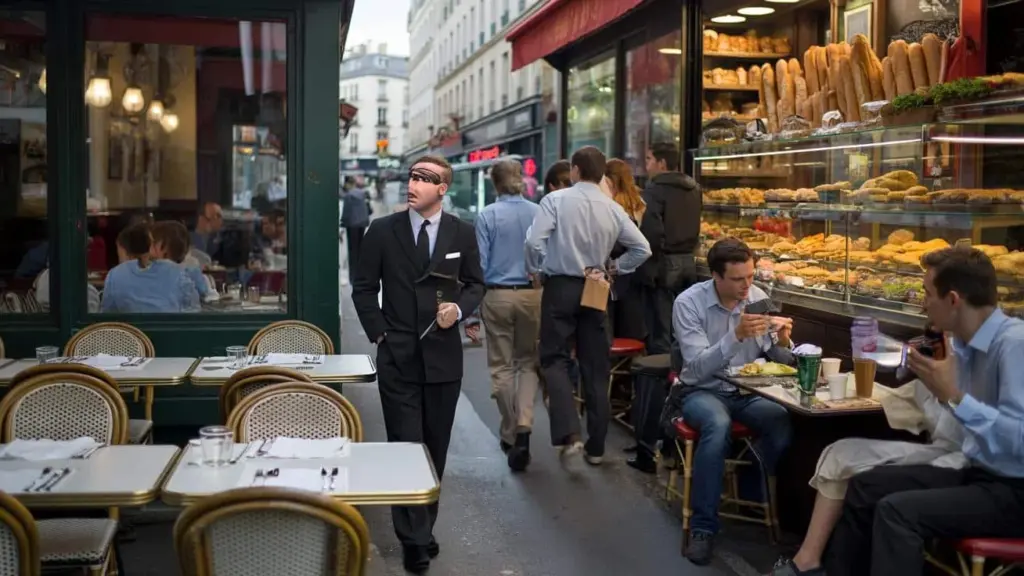
The country that turned eating into an art form is facing a strange reality: restaurants are losing customers, even though people aren’t really eating out less. They’re just going elsewhere, and at very different price points.
A sharp drop for traditional restaurants
French trade body UMIH (Union des métiers et des industries de l’hôtellerie) reports a steep fall in footfall for classic sit‑down restaurants in 2025. Across the summer, visits dropped by an estimated 15 to 20%, and the slide continued through the autumn.
In a sector that employs over a million people in France, a 20% fall in customers is not a blip, it’s a shock.
Restaurant owners describe the situation as a slow-motion crisis. UMIH’s national president has spoken of “a catastrophe” for the profession, highlighting that around 25 hospitality establishments shut down every single day across the country. This includes small family bistros, mid-range brasseries, and independent venues that rely heavily on local regulars.
Price hikes are hitting loyal customers
For many diners, the break with their favourite restaurant started with the bill. One Paris-area restaurateur reports losing between 15 and 25% of his clientele since raising prices. His steak entrecôte, for instance, now costs €33, up €6 in just one year.
That kind of jump matters in a country where many households already watch their budgets carefully. French TV channel TF1 interviewed customers who admit they have kept their habits, but stretched them out:
Where they once ate out weekly, they now go every three weeks, or save restaurant visits for birthdays and special occasions.
These are not people turning away from restaurants forever. They are rationing their pleasure, calculating more, and checking menus before they sit down.
Are people simply eating at home instead?
The short answer is no. Data from Gira, the consultancy headed by hospitality expert Bernard Boutboul, shows that the number of meals eaten away from home in France actually rose by 5.1% between 2019 and 2024.
➡️ Eine lehrerin weigert sich gendersternchen zu benutzen wird versetzt weil eltern sich beschweren und die frage ob sprachregeln wichtiger sind als meinungsfreiheit spaltet das land
➡️ Schlechte nachrichten für wohlhabende erben die plötzlich erbschaftssteuer zahlen müssen und nun lautstark von enteignung sprechen eine geschichte die das land spaltet
➡️ Gendersprache im klassenzimmer zerreißt eine kleinstadt
➡️ Warum du trotz guter vorsätze im januar scheitern wirst weil du dich morgens an eine kleine lüge klammerst die deinen fokus und deine motivation langsam zerstört
➡️ Bis Ende Oktober müssen Rentner mit mehr als 24.000 Euro Jahresbezügen eine korrigierte Steuervergünstigung erklären
➡️ Warum teilzeitkräfte unser system ruinieren
➡️ Diese kleine Gewohnheit verhindert Entscheidungsmüdigkeit schon am Vormittag
➡️ Warum falscher Optimismus zum Jahresanfang oft nach hinten losgeht
The French are still eating outside their homes. They are just doing it differently, and traditional restaurants are losing ground to faster, cheaper formats.
The unexpected winners: bakeries
The most striking shift is happening behind the counters of French bakeries. Once focused on baguettes and croissants, many now run a full-blown lunch service. One bakery owner interviewed by TF1 says savoury food now represents more than 40% of her turnover.
By adding seating and simple menus, bakeries have turned themselves into low-cost lunch spots that feel both local and informal.
Typical offerings include:
- a sandwich (often freshly made with bakery bread)
- either a starter, such as a small salad or quiche slice, or a dessert like a pastry or yoghurt
- a drink at a modest additional cost
The bill rarely exceeds €12, which is dramatically lower than many sit‑down restaurants, especially in city centres. For office workers facing higher rents, rising transport costs and energy bills, that difference adds up fast.
How restaurants are trying to adapt
Many restaurateurs have realised they cannot compete head‑on with cheaper formats unless they change how they work. So a new wave of “anti-crisis” menus is emerging: short, simplified line‑ups with limited choice and tighter portions.
Instead of long cards packed with dishes that require large stocks and careful prep, some restaurants now offer, for example, two starters and three main courses. That shift lets them cut food waste, negotiate more effectively with suppliers, and reduce staffing pressure in the kitchen.
Smaller menus mean lower costs and faster service, but they also force chefs to be more focused and inventive.
Here is how a typical traditional restaurant lunch might compare with a bakery or grab-and-go offer in France:
| Type of venue | Typical spend per person | Average time spent | Main appeal |
|---|---|---|---|
| Traditional restaurant | €20–€35 | 60–90 minutes | Service, atmosphere, cooked-to-order dishes |
| Bakery with seating | €8–€12 | 20–40 minutes | Price, speed, familiar products |
| Fast-food / burger chain | €10–€15 | 20–30 minutes | Predictability, promotions, late hours |
Why the shift feels so brutal for French restaurateurs
France has long framed restaurants as more than businesses. They are places where people linger, argue politics, hold family gatherings, and negotiate deals. Their decline hits a nerve.
Behind the emotional reaction sits a simple economic squeeze. Ingredients, wages and energy bills have all increased. Restaurateurs either absorb those costs and earn less, or raise prices and risk losing customers. Many have already done both, and still struggle.
At the same time, younger urban customers are used to flexible, phone-led food habits: delivery apps, quick lunches between meetings, coffee plus pastry on the run. A long, seated meal becomes a treat, not a routine.
What this means for everyday French life
For workers, the shift towards bakeries, sandwich shops and fast-food chains changes the feel of the day. A quick €10 meal eaten at a counter or desk is not the same as a two-course lunch in a brasserie, even if the calories match. Social contact with staff and other customers tends to be shorter and more transactional.
In smaller towns, the closure of a long-standing restaurant has wider effects: fewer options for tourists, less evening activity on the high street, and fewer local jobs for young people looking for casual work.
Key notions behind the numbers
Two economic ideas help explain what is happening.
Price elasticity describes how sensitive customers are to a change in price. In this case, a €6 jump on a €27 steak is enough to push many diners to go less often, even if they still like the venue. The pleasure of the meal has not changed, but the mental “worth it” calculation has.
Substitution effect is the way people switch to a different product when the original one becomes too expensive. Here, traditional restaurants are being swapped for bakeries, chains and ready-to-eat supermarket meals. The function is similar – feeding people outside the home – but the format and cost are different.
Possible futures for French dining
Several scenarios are circulating among industry analysts. A pessimistic version sees a wave of closures among mid-range independent restaurants, with big chains and fast-service concepts filling the gap. Cities would still have top-end gastronomic venues for tourists and wealthy locals, but daily, affordable “cuisine du marché” would be harder to find.
A more optimistic scenario imagines a leaner but more creative sector. Some restaurants could focus on one signature dish, rotate menus aggressively, or share kitchens and staff between several concepts. Others might lean harder on local produce and neighbourhood loyalty, organising themed evenings or partnerships with bakeries and food trucks rather than competing head-on.
The French are not falling out of love with food. They are renegotiating how much they are willing to pay, and for which experience.
For now, traditional restaurants in France are caught in that negotiation. Fewer customers at the table does not mean less appetite, but it does mean the entire business model of the midday and evening meal is under pressure. How owners adapt in the next few years will shape not only their balance sheets, but also the everyday rhythm of French streets and squares.