
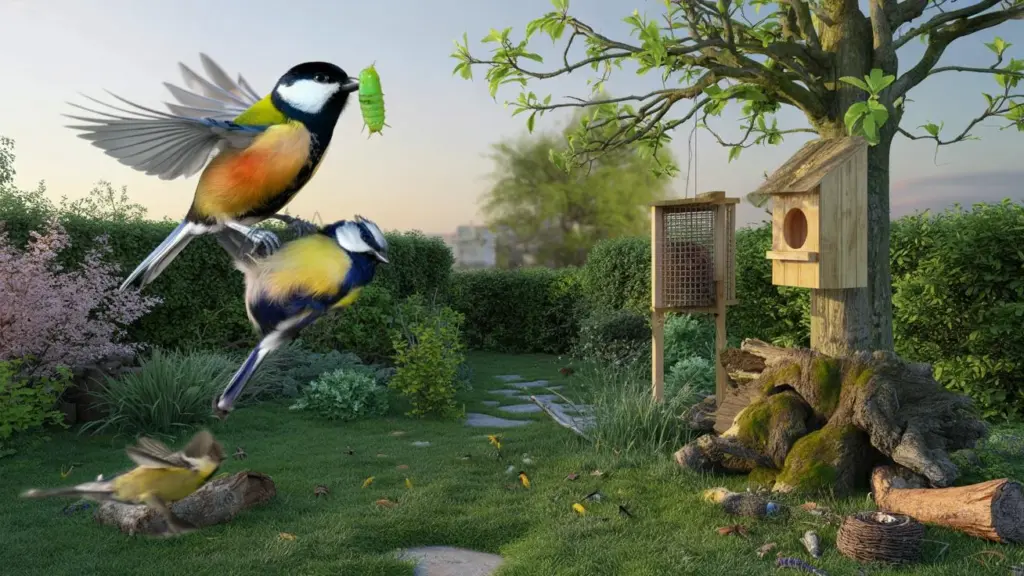
When a tit decides to settle in your garden and keeps coming back, it is not only there for its cheerful song. Its presence, behaviour and even its absence can reveal a surprising amount about the health of your local environment.
Why a simple tit can reveal so much
Across Europe, great tits, blue tits and crested tits are among the most familiar garden visitors. They are protected species and, for now, not considered at immediate risk. Yet Europe has lost around a quarter of its birds in 40 years, with some farmland species crashing by as much as 60%. Against that backdrop, every regular tit visiting your garden becomes a tiny but telling environmental signal.
These birds react quickly to changes in food, nesting sites and pollution. Because they are small, short‑lived and stay in the same area for most of the year, their population numbers respond fast to local conditions. That makes them excellent “bioindicators” — living organisms that reflect the state of an ecosystem.
When tits thrive in a garden over several years, it usually means the wider micro‑ecosystem is functioning well: insects, plants, trees and soil life are all playing their part.
What the presence of tits says about your garden
A sign of rich insect life
Tits are voracious insect hunters, especially during the breeding season. A single brood can mean parents bringing hundreds of caterpillars and small invertebrates to the nest each day. They need a steady supply of bugs, not just seeds or fat balls.
If tits return each spring and manage to raise chicks successfully, that suggests your garden still supports enough insects. That, in turn, usually points to moderate or low pesticide use, varied vegetation and at least a few “messy” corners where life can thrive.
- Great tits favour larger caterpillars on oaks and fruit trees.
- Blue tits often search shrubs, hedges and the underside of leaves.
- Crested tits rely more on conifers, mossy trunks and forest‑like areas.
Where there are tits feeding busily in spring, there is usually an unseen army of caterpillars, spiders and beetles — a core part of a functioning food web.
An indicator of structural diversity
Tits need more than just food. They look for cavities to nest in, perches to survey territory and dense foliage to hide from predators. A garden that attracts them often has a good mix of features:
- Mature trees with natural holes or old wood
- Hedges or dense shrubs for cover
- Some open space to move and forage
- Safe nesting boxes placed at the right height
If you spot them examining cracks in old walls, hovering near a bird box or inspecting holes in trees, they are judging whether your plot offers a full package: food, safety and housing.
➡️ Check your cupboards: some tins of sardines could be worth a small fortune
➡️ Schlechte nachrichten für einen rentner der einem imker land verpachtet hat er muss landwirtschaftssteuer zahlen ich verdiene damit kein geld eine geschichte die die meinungen spaltet
➡️ Wie eine schulreform eine kleinstadt spaltet und warum eltern und lehrer sich wegen gendersprache im klassenzimmer unerbittlich bekämpfen
➡️ Rentner zahlt Landwirtschaftssteuer für imkerland und fühlt sich vom Staat verraten
➡️ Diese fahrradstrafe trennt vorbildliche radler von denen die regeln nur als vorschlag sehen
➡️ Schlechte nachrichten für backofen fans der airfryer gewinnt das stromduell überraschend deutlich
➡️ A grave rewrites history: humanity’s first gold jewellery was buried here
➡️ Schwere folgen für ungeborene kinder weil immer mehr schwangere impfungen verweigern eine entwicklung die frauenärzte verzweifeln lässt und das land tief spaltet
When the tit barometer starts to fall
Fewer visits, more worrying questions
People who watch their gardens year after year often notice patterns: one spring filled with tit song, another strangely quiet. A sudden drop in sightings can point to several environmental pressures.
| Change you notice | Possible environmental signal |
|---|---|
| Fewer tits at feeders in winter | Reduced local population, habitat loss nearby, or milder winters changing migration and survival |
| No nesting attempts in boxes once used | Disturbance, predators (cats, squirrels), or nearby trees removed, reducing insect supply |
| Adults present but few fledglings seen | Food shortage during breeding, extreme weather, or chemical exposure in insects |
One quiet year does not necessarily mean disaster. Populations can fluctuate naturally. But a clear downward trend in your own garden notebook across several years should raise questions about local building work, tree felling or heavier pesticide spraying in surrounding streets and fields.
How your gardening choices influence their verdict
Feeding without creating dependence
Feeders help tits through winter, when insects are scarce. Seeds, fat balls and suet blocks are welcome, especially in cold snaps. They also bring the birds close enough for you to observe their habits.
Yet feeding is only part of the story. If a garden offers nothing but feeders, without insect‑friendly plants, the birds become more vulnerable when you go on holiday or food runs out. Natural foraging spaces keep them resilient.
The real ecological upgrade comes when feeders are combined with blossom trees, native shrubs, long grass patches and dead wood left in quiet corners.
Pesticides: the silent signal
Spraying to keep a “perfect” lawn or blemish‑free roses can ripple through the food chain. Insecticides reduce the very prey that tits rely on. Some chemicals can accumulate in the insects that survive, reaching chicks through their meals.
Switching to mechanical weeding, spot‑treating only the worst infestations or favouring resistant plant varieties all help keep chemical pressure down. Over time, a richer insect community returns, and tits usually follow.
Reading tit behaviour like a weather report
Seasonal patterns that reveal ecosystem health
Watching tits through the year is a bit like tracking changing weather fronts, but for wildlife. Their daily movements respond to shifting conditions in a very local radius.
- Late winter: Mixed flocks of tits roaming together suggest they are still searching widely for food.
- Early spring: Pairs forming and males singing from high perches show nesting territories are being claimed.
- Peak breeding: Adults flying to and from the same spot every couple of minutes usually signals a nest full of hungry chicks.
- Summer: Groups of noisy juveniles indicate successful breeding nearby and an abundant food supply.
If any of these stages consistently fails to appear, it can point to wider ecological stress beyond your fence, such as tree diseases, new urban developments or changing farm practices.
Beyond your garden: what scientists learn from tits
Across Europe, researchers place nest boxes in woodlands, parks and even city centres and track tits year by year. They measure clutch size, hatching success and survival. Combined with temperature records and insect counts, those data sets have become a key tool for studying climate change.
For example, scientists have documented that caterpillars now tend to peak earlier in spring than they once did. Tits that cannot shift their breeding dates to match this new timing risk raising chicks when food is already dwindling. That mismatch, observed in many places, warns of deeper disturbances in seasonal rhythms.
Tits are small, but their family calendars — when they lay, hatch and fledge — act like a highly sensitive clock for climate and land‑use change.
Practical ways to turn your garden into a better barometer
Simple steps that strengthen their signal
If you want your local tit population to give a clearer, stronger reading of environmental health, a few adjustments can make a real difference:
- Install at least one nest box facing north‑east or east, out of full midday sun.
- Plant native species such as oak, hawthorn, crab apple or willow, which host many caterpillars.
- Leave some leaves and dead wood on the ground to shelter insects.
- Keep a small water source, like a shallow dish or tiny pond, topped up and clean.
- Keep cats indoors at dawn and dusk during the main nesting period.
None of these steps require a huge budget or a large garden. Even a balcony can host a small box and a pot with insect‑friendly flowers, adding another data point to the living map of urban biodiversity.
Extra context: a few terms and scenarios
Ecologists often talk about “bioindicators”. These are species that react quickly to environmental changes and are easy to monitor. Amphibians reveal water quality. Lichens hint at air pollution. Tits speak for the health of trees, insects and garden structure.
Imagine two neighbouring streets. One is coated in weedkiller, trimmed weekly and stripped of old trees. The other keeps hedges, allows wild corners and avoids chemicals. After a decade, both may still see pigeons and crows. Yet the second street will almost certainly host more tits, more varied song and a more stable breeding population. That contrast reflects not just personal gardening taste, but two very different future paths for local biodiversity.
Watching a tit on a feeder is pleasant. Realising that this little bird is quietly reporting on the state of your shared environment turns that pleasure into something deeper: a chance, from your own back door, to track the health of the place you live and to nudge it in a better direction.